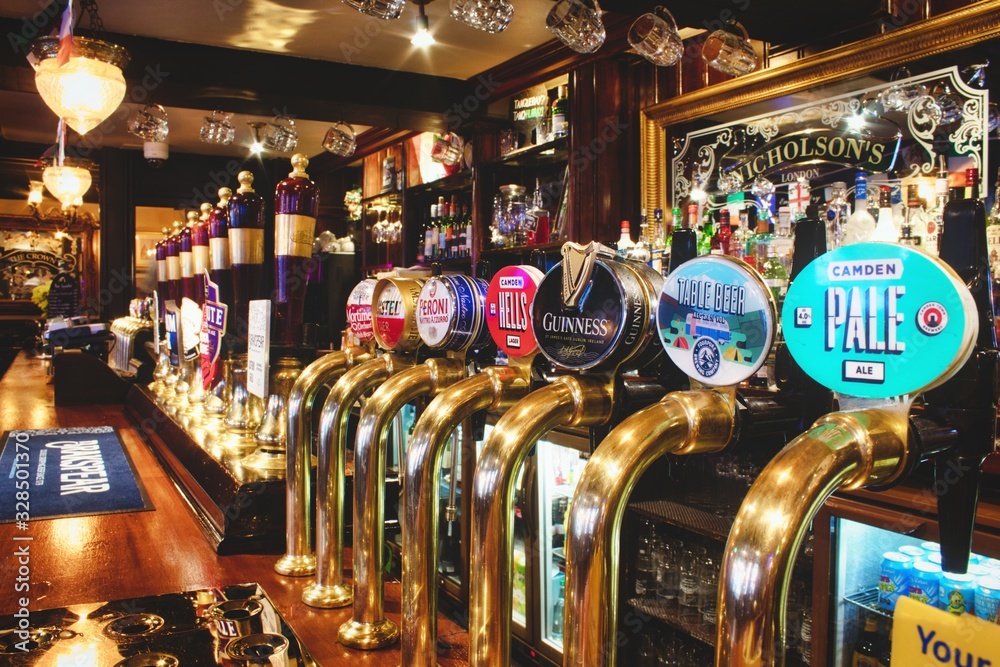
We all know the old adage “adapt or die”…but what about The Great British Pub?
Businesses Must Adapt: Is The Great British Pub Next on the Menu?
Walk down almost any British high street, and you can feel it. The rhythm has changed. Shops turn over faster. Offices empty earlier. Coffee queues form at 8am, not 11.30. And somewhere between the charity shop and the vape store sits a pub that looks pretty much exactly as it did twenty years ago, maybe even fifty, quietly hoping the world’s pendulum will swing back in its favour.
This is not a moral judgement. It is an economic one. Businesses must adapt because markets are constantly moving.
“You can’t beat Mr Market”
Warren Buffett
Customer habits shift. Input costs change. Regulation changes. If you treat your business like a museum exhibit, you are making a risky bet that the world will stand still.
Keith Rozelle has spent three decades in complex B2B sales and advisory roles, from City of London boardrooms to fast growth SMEs. He now works with leadership teams on sales strategy, reputation, and how commercial decisions really get made when conditions change.
But businesses must adapt, and that is exactly the conversation we need to have about pubs.
Table of Contents
Why Do Businesses Need to Adapt?
Every time pub closures hit the headlines, the tone is mournful. A national institution under threat. A cultural loss. A sign that something has gone badly wrong. Some of that may be true, but it is also not the full story.
Other sectors have had to adapt relentlessly:
Retail. Manufacturing. Media. Financial Services. Agriculture. None were given the option of staying still because we liked them that way. They survived by changing shape, reacting to market shifts, anticipating changing customer needs but with an eye on the reality rather than taking the nostalgic view.
A strange but useful example makes the point – did you know that Peugeot also makes pepper grinders?
Most businesses have something similar. A location. A reputation. A process. A customer base. A supply chain. The question is whether you use those “things”, those assets, to evolve your business, or simply maintain the status quo. And underneath all of that sits one stubborn requirement: you have to actually know who your customer is right now, not who they used to be.
A Change to Changing Circumstances
Here is the uncomfortable truth many owners avoid. You need to change proactively before circumstances force the change upon you.
Businesses must adapt, and those that do survive do not wait until they are desperate. They experiment and strategise while the business is still healthy. They build options while they still have time to choose. Crucially, they update their picture of the customer in front of them, rather than clinging on to the customer who actually left ten years ago.
In changing circumstances one thing is almost always true. The businesses that act early, that act on the front foot, get to decide their next move. The businesses that act late or are not therefore perfectly structured to change get taught a lesson.
This pattern is not new. Yamaha moved from instruments into engineering. Mitsubishi from shipping into industry and finance. Samsung from trading into electronics. Nokia from pulp and paper into telecoms. Tata across cars, steel, software, and hotels.
Different eras. Same lesson. Longevity is usually a series of reinventions, not one great idea preserved in brine.
Evolution, not Revolution.
Early Stage Businesses And Real Benefits Of Adaptation
A sceptic might argue that this works for conglomerates, not “normal” businesses.
That misunderstands what adaptation usually looks like. For early-stage businesses, it rarely means entering a new industry. It means building a second route to market, a second customer segment.
The real benefits that early-stage teams can create quickly are practical. A productised service alongside the core offer. A different pricing model that smooths cash flow. A second route to market through partners or communities. Better lead indicators rather than just raw activity.
None of that is possible if you are in any way unclear about who your ideal customer is, what outcome they need, and how customers’ behaviour is changing. Too many teams obsess over what they want to sell, rather than who they are serving.
Those changes reduce fragility. They create options. They are the benefits that early-stage leaders almost always wish they had built earlier.
Businesses Must Adapt: Pubs, Policy, And Reality
The pressure on pubs is real. Energy costs. Labour shortages. Alcohol duty. Business rates. Changing drinking habits. Businesses must adapt accordingly. A steady rise in moderation and alcohol free choices. And once a year, Dry January, when many of your regulars switch to tap water and herbal tea for a month.
All this spells cash flow interruption.
The Chancellor’s recent review of business rates included targeted relief for pubs and live music venues, covered by the Financial Times and explained more broadly by the BBC, with background briefings from the House of Commons Library.
Taxpayer support can be justified but it raises an awkward question: If a business model is weak or flawed, should the taxpayer keep propping it up or should those businesses adapt to the new reality?
This is not about compassion. It is about incentives or the law of good returns. When you subsidise a tired or ailing business model without requiring adaptation in return, you risk taxpayer cash. Other small businesses are not insulated from market shifts in the same way as our pubs are.
And if you claim that your pub is a community asset, then knowing your community – your ideal customer- in forensic detail is essential. Who actually lives nearby? How many customers drive rather than walk? How many are cutting back on alcohol but still want a comfortable place to meet friends? How many are freelance, hybrid, or retired and looking for somewhere civilised to sometimes work from in the daytime?
So what does adaptation look like for a pub, in plain English?
Daytime trade has to be real, not theoretical. Coffee that’s worth paying for. Simple lunches. Quiet tables. Dependable wifi. Clear and present value. If your regulars are now working from home three days a week and you are still only really alive on a Friday night, that is not “the market”. That is a failure to adjust to who your customers really are.
Experiences must matter more than alcohol by volume. Tastings. Quizzes done proper. Clubs. Sport shown with intent. Live music that fills the room rather than just filling a calendar. Business must adapt. You are not just selling pints, you are selling reasons for people to prize themselves away from their nice, comfortable armchairs.
Operations need to get smarter. There are practical applications of AI for forecasting demand, staffing, stock controls, and reducing food waste, whilst keeping the front of house human and authentic. Used properly, they help you match what you buy and who you rota to the people who actually show up.
Menus need discipline. Fewer items. Less waste. Better margins. And in 2026, a wide range of 0% beers, wines, and adult soft drinks is not a quirky extra; it is basic customer knowledge. If Dry January empties your tills instead of filling them, that is a know your customer problem as much as a sales one.
And community partnerships matter. Local producers. Charities. Sports clubs. Book groups. Walking societies. Shared audiences can be helpful and reduce marketing costs, but only if you are paying attention.
Which groups already trust you, and how do they like to spend their time?
Subsidies. Fairness. A Higher Bar.
Whenever this argument is made, someone will say it is unfair. Pubs are overtaxed. Business rates are broken.
They have a point. Business rates distort behaviour and are politically difficult to reform because they raise meaningful revenue for the government.
But fairness cuts both ways. If the government intervenes to protect certain sectors, it must be clear why. Farming policy offers a useful parallel. Support is increasingly tied to explicit public goods rather than simply preserving old models.
That principle matters. If we are buying social value, say so. Own it. Measure it. Time limit it. Do not pretend it is market success.
A better position is not “no support ever”. It is this: Be honest about what you are funding, why you’re funding it and what you expect in return.
Capability, Customers, And Who Survives
The Great British Pub will always matter culturally but its future will not be secured by affection alone. It has to adapt to become more relevant for the customers of 2026.
Businesses must adapt because the world will not wait for them out of pure sentiment. Performance beats nostalgia every day. And capability now includes the unglamorous work of really understanding who drinks less, who drinks differently, and who still wants to come out if you give them a reason.
Change is not a betrayal of tradition. It is how traditions survive.
So the question is no longer simply whether pubs deserve to exist – we already know the answer to that question.
It is whether pubs know their customers well enough to adapt for the future.