
2025 Was The Year That Was. Curiosity is 1 of the Key Sales Skills for 2026

Key Sales Skills for 2026: Stop Driving by Rear View Mirror
Not all years change you. 2025, however, grabbed me by the lapels and said: “Right then. We’re doing growth.”
From boardrooms to training rooms, Keith Rozelle has seen what works. Each week, his newsletter delivers powerful sales strategies and proven LinkedIn tips for ambitious business owners. This time, it’s key sales skills for 2026.
How to Hijack Small Talk: Ask Big Questions
At our family Christmas Charades gathering (peak British theatre, low budget), somewhere between the last mince pie and someone violently miming “Titanic”, a question lodged itself in my head:
What were your high and low points of 2025?
Harmless on paper. Not harmless when you answer it properly, especially in sales.
Vulnerability Feels Risky: Here’s Why
Salespeople aren’t bad at reflection because we’re arrogant. We’re bad at it because proper reflection requires vulnerability, and most sales cultures don’t exactly roll out a welcome mat for that.
Activity vs Outcomes
So we keep moving. Next target. Next quarter. Lots of motion, fewer moments of judgment. Activity feels productive because you can count it: calls made, emails sent, meetings booked, connections added.
Meanwhile, the things that shape your sales skills for 2026 often get ignored: deal quality, deal velocity, decision confidence, and whether the buyer genuinely wants to change anything.
If you want a quick, brutally honest benchmark on the LinkedIn side, check your Social Selling Index (SSI) and compare it to peers in your industry LinkedIn Business Solutions
I’ve never cared about “forty calls a day”. I’ve cared about three meaningful conversations. The kind where you learn something real, and you either move the opportunity forward or uncover what’s blocking it.
Silence and the Art of Not Chasing
Two highs, One lesson
Back to charades.
For me, 2025 came with two equal highs.
First, our first grandson. No targets, no forecasts, just a reminder that life carries on whether your pipeline behaves or not.
Second, after several years of heartbreaking silence, I’m back in touch with close family members. It’s been a long, difficult process, helped by people who knew when to listen and when to challenge.
Creating conditions beats pushing
What hit me hardest was the lack of control.
I couldn’t force a reply. I couldn’t “follow up” my way into reconnection. I could only create the right conditions: gentle messages at the right moments, with no pressure.
Eventually, something shifted. Not because I pushed, but because space existed for life to realign.
P2P is Selling in Real Life
That’s modern sales, too. Silence rarely means rejection. More often, something you can’t see is happening in the buyer’s world. Pressure at that point doesn’t help. Judgement does.
Just before Christmas, a chief officer at a household name organisation thanked us for patience while he dealt with a sudden bereavement. Some competitors had gone the other way: too many voicemails, visible frustration, one edging into rudeness.
We stayed present without crowding. Kept the door open. Shared relevant reading.
Sales is no longer B2B or B2C. It’s P2P, People to People.
If you want a simple way to stay human without getting sloppy, read on about tactical empathy and how it builds trust without pressure.
[Image 2: A quiet desk scene with a notebook titled “Next best question” and a phone left face down.]
My Million Dollar Facepalm
Commission pressure narrows your thinking. And the moment a deal becomes about your number rather than their outcome, judgment suffers.
I learned that the hard way. I once priced an IT solution for a large US bank at just over $1 million. I was delighted. First million-dollar deal, surely.
At the loss review, my manager’s manager asked: “Why that price?”
My honest answer: “Because I wanted to do a million-dollar deal”

We lost. Of course we did.
Chasing commission is a symptom. The real problem is fear.
Fear drives urgency. Urgency distorts judgment. The antidote isn’t pushing harder, it’s asking better questions: who else needs to be involved, what does “good” look like for the buyer, and do I actually understand how decisions get made here?
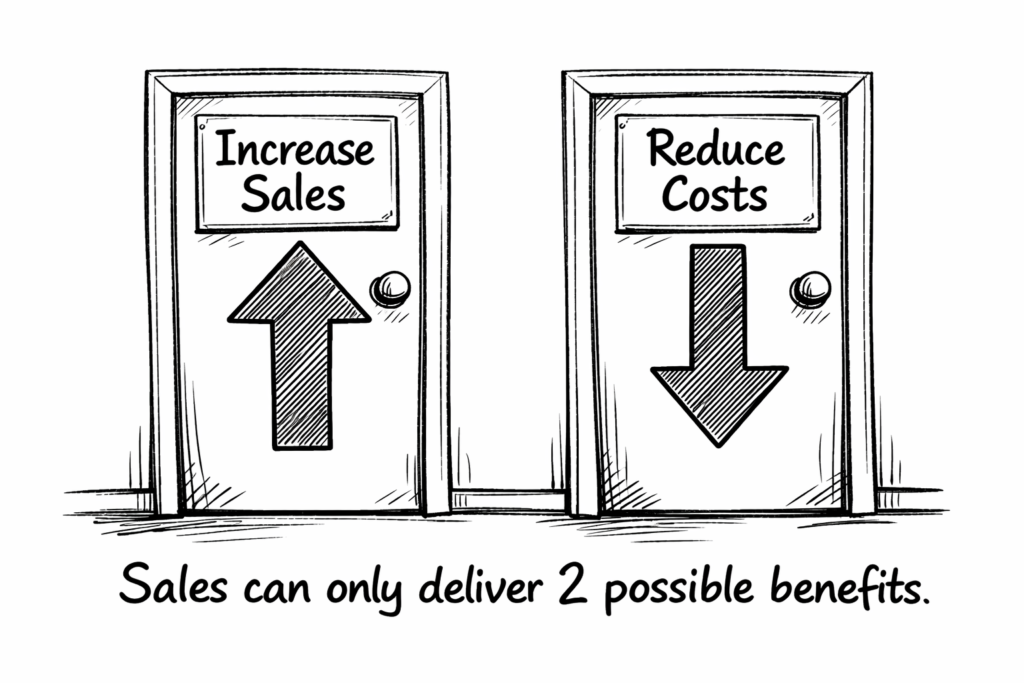
And here’s the clearing fog line: you can only ever sell two kinds of benefit, increased sales or reduced costs. If you can’t link what you’re selling to one of those, you’ll keep leaving money on the table.
Pipeline Resilience: Stop Betting the House
“Seventy per cent don’t happen”
Early in my sales career, an EMEA Senior VP said to me: “Seventy per cent of big deals don’t happen.”
Not because salespeople are useless. Because of things you’ll never see: politics, budgets, strategy shifts, leadership churn. Events that are completely outside your control.
The lesson wasn’t “stop being ambitious”. It was “build resilience”. Wider stakeholder coverage. Healthier pipelines. Less “all in” on one heroic deal. (caveat: very occasionally, this can happen. Get advice)
Betting everything on one deal isn’t courage. It’s risk wearing a motivational quote.
And it’s why this line stuck with me all year:
You don’t move forward by looking in the rear-view mirror.
Reflection should inform judgement, not shrink ambition for sales leaders. That mindset is part of building sales skills for 2026 that actually last.
Curiosity is the Defining Skill for 2026
Curiosity Beats Hustle. Every time.
I’ve watched smart salespeople get seduced by easy wins. Then complexity arrives and exposes the gaps.
A friend at an investment bank told me about a cloud rep who left a meeting confident, promised a proposal, and then vanished. The sales director ended up sending someone else. Different questions. Deeper curiosity. Next quarter, they were awarded a seven-year £250k MRR deal. Curiosity pays.
The defining sales skills for 2026 won’t be hustle or charm. It’ll be intellectual curiosity: asking why, sitting quietly with ambiguity, and staying genuinely interested in the buyer’s world.
If you’re curious as to why curiosity improves business performance (and how to cultivate it), this HBR piece is well worth a read HBR: The Business Case for Curiosity
3 Questions to Take Into January
- What belief or habit from last year should you immediately jettison?
- Where could greater curiosity improve your sales approach?
- If you stopped replaying last year’s mistakes, what could you do with all that new headspace?
Your Next Step
Block 30 minutes this week to score ONE of your live opportunities on these 3 things:
- Outcome clarity: Is it increased sales or reduced costs?
- Stakeholder coverage: Do you know who will say yes, who could say no, and who says “not yet”?
- Curiosity depth: Are you still asking, or are you performing?
Reply with MIRROR and I’ll send you my one-page “Sales skills for 2026” reflection worksheet you can use with your team. (No fluff. Just the bits that make deals healthier.)
And if you know someone still battering themselves over 2025, share this with them. They don’t need another tactic…they need perspective.
- The Future of Universities: Protecting What the Markets Cannot
- The Impact of Number 10 North on Universities
- Protected: Section 18 Letter to Rachael Maskell MP
- Could These 8 Universities Become The Northern Powerhouse’s Economic Engine?
- Milburn’s Missing First Rung and What It Means for Graduate Employability