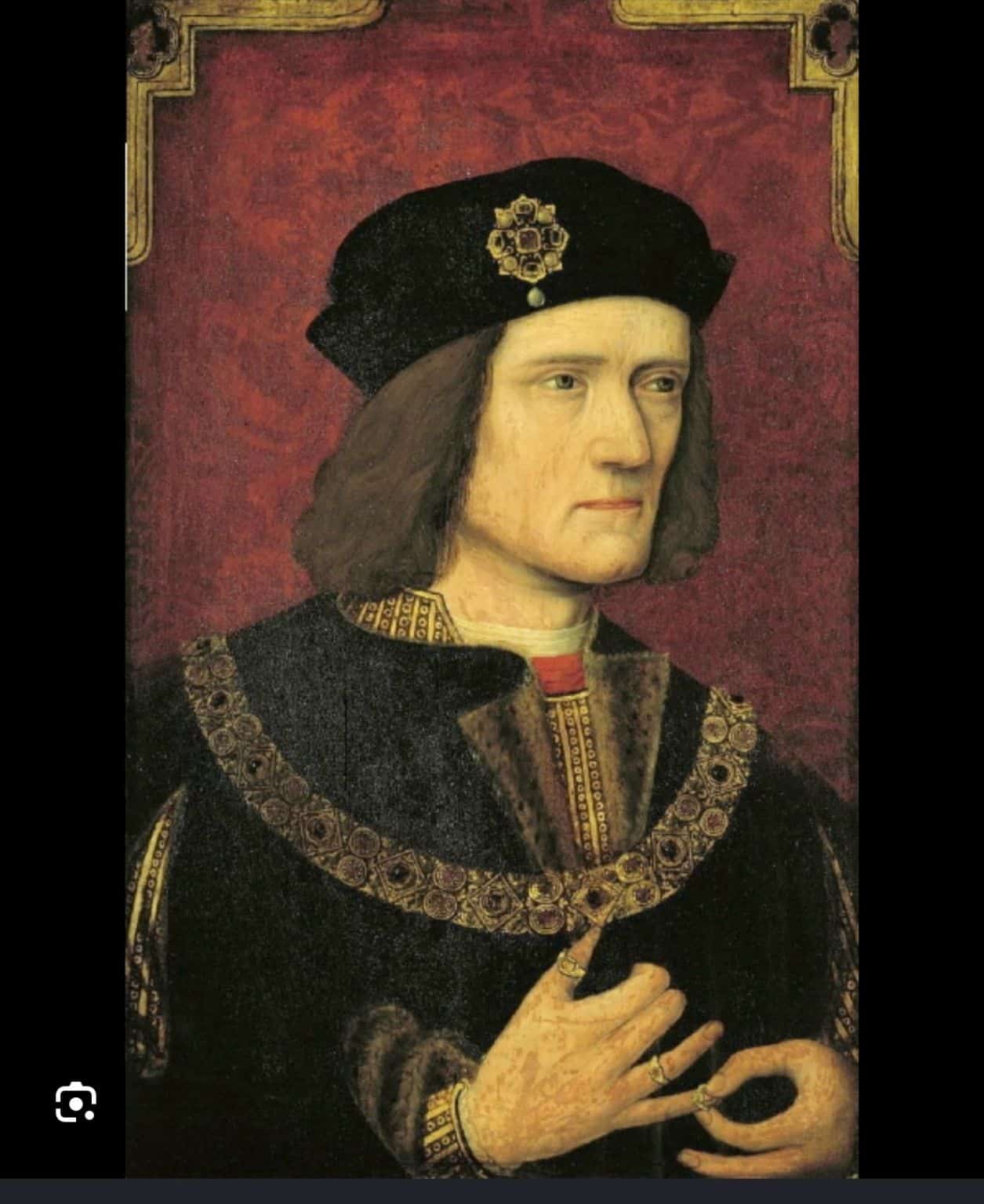
Richard III’s Incredible Offer Was Also 1 Amazing Sales Story
Some of the most amazing sales stories are not really about sales at all. They are about people, pressure, timing, and the strange way a perfectly ordinary thing can suddenly become priceless when circumstances change.
That is why Richard III’s famous cry from the battlefield still works as an amazing sales story more than 500 years later. It’s also 1 of the stories every salesperson should learn at sales school
“A horse, a horse, my kingdom for a horse.”
On any ordinary day, such an offer would be ridiculous. An entire kingdom for a horse? It is the sort of offer that would make the CEO or VC gently close the laptop and ask whether everyone might benefit from a short break.
Table of Contents
But this was no ordinary day. Richard III was in the middle of the Battle of Bosworth Field. He had been unhorsed. The battle was slipping away. His enemies were closing in. In that moment, a horse was not just a means of transportation; it was not merely a “nice to have”, it was literally life or death.
And that is why it remains an amazing sales story today.
Why This Amazing Sales Story Still Makes Sense
There are moments in life that most of us would recognise. You are not looking to buy anything. Not really. You are busy, genuinely busy. Messages coming at you from every direction, someone trying to sell you something that feels less than essential, though potentially useful. Worth a look at some point. Just not now.
Then something happens. A problem sharpens. A deadline gets brought forward. Sales miss their number, and it’s going to hurt. Suddenly, the very thing you were not thinking about becomes the only thing you can think about.
The offer has not changed. The price has not changed. The product has not changed. But the situation has changed completely.
That is the part of sales that too many people miss.
From boardrooms to start-ups, Keith Rozelle has seen what works. Each week, his newsletter, Sales is a Dirty Word, explores how complex sales actually happen, especially in environments where decisions are rarely as simple as they look from the outside.
And in that sense, Richard III’s desperate offer is not just a theatrical line from English history. It is one of the great, amazing sales stories hiding in plain sight.
The Same Offer Can Mean Nothing One Day But Everything The Next: The Richard III story is not really about a horse. It is about timing, need and perceived value.
The day before Bosworth, Richard would not have offered his kingdom for a horse. He had no reason to. The day after Bosworth, he could not have made the deal even if he wanted to.
But in that moment, on that battlefield, a horse became priceless.
This is where sales becomes less about persuasion and more about understanding human behaviour. People rarely make important decisions because someone has finally explained an offer clearly enough. They make decisions because their world has shifted in a way that makes the offer newly relevant.
That applies to consumer purchases, B2B decisions, executive education, student recruitment and professional services. The buyer is not always saying, “Convince me.” Very often, they are saying, “Is this the right answer for the situation I now find myself in?”
There is a big difference between those two questions. The first invites persuasion. The second demands relevance.
Value Changes When The Buyer’s Perception Changes
We often talk about value as if it somehow sits neatly inside the product. The programme is valuable. The course is valuable. The consultancy offer is valuable. The technology inside is valuable.
But value does not behave that simply.
A master’s programme that feels like a “nice to have” in March can become a “must have” in August after a missed promotion or redundancy. An executive education course that looked expensive last year can suddenly look sensible when a new leadership role appears. A CRM system that felt like a back-office admin project can become urgent when revenue starts leaking from the pipeline.
The thing itself may not have changed. But the buyer’s situation – or perception – has. That is what Richard III’s situation teaches us. The horse did not become a better horse. It did not gain new features. It did not come with a premium saddle, a faster onboarding process or longer legs.
It was simply the thing he needed, exactly when he needed it.
Read: Trump’s Art of the Deal: Old Relic or Still Relevant?
This is why timing in sales is so often misunderstood. It is not simply about catching someone on the right day. It is about understanding how need develops, how urgency appears, and how quickly a low-priority idea can become an unavoidable decision.
Why Student Recruitment And Conversion Funnels Can Still Miss
Higher Education has its own version of this problem.
We like to describe the student recruitment and conversion funnel as if it were a tidy journey: enquiry, application, offer, acceptance, enrolment. On paper, it looks reassuringly logical. Each stage follows the one before. Each action can be counted. Each percentage point can be tracked. The whole thing has the pleasing confidence of a process diagram.
In reality, it is much messier. The funnel is rarely owned end to end. Marketing generates interest. Admissions process applications. Faculties influence credibility. Student services shape confidence. Someone else considers retention plus data sits in different systems. And insight often appears too slowly to affect “in-flight” decisions.
A prospective student may ignore three emails and then download a prospectus at 11pm. A final-year graduate may dismiss a postgraduate course for months, then suddenly reconsider after a difficult job interview. A senior manager may ignore an executive programme until a promotion opportunity appears, or until a board conversation makes their current skills gap feel rather more visible.
Read: How to Unlock Sales(force) CRM Intelligence
The visible action is a click, a form, an enquiry. The human reality, however, is a moment that matters. Those two things are not nearly the same, and unless institutions can connect the human moment to the operational response, opportunities will continue to fall through the gap between marketing activity and enrolment outcomes.
Silence Does Not Always Equal “No”
This is where many institutions and businesses get into trouble.
Someone didn’t respond to our email, so we conclude they are not interested. Someone else didn’t attend our event, so we assume the offer wasn’t strong enough. If someone does not reply to the third email, we move them into a colder segment and carry on.
Sometimes that’s right. Often, however, it’s not.
Silence is not always the absence of need. Sometimes it is the absence of timing. The need has not fully formed yet. The pressure has not arrived. The internal conversation has not happened. The buyer has not moved from “interesting” to “important”.
That distinction matters because it changes how we behave.
If we assume silence means no, we stop listening. If we understand that silence may mean “not yet”, we start thinking about how to stay useful without becoming a nuisance.
And this is where good sales becomes far more sophisticated than the caricature. It is not about pushing harder until someone gives in. It is about being relevant enough, trusted enough and close enough that when their situation changes, you are not starting the conversation from scratch.
The CEO Who Was Only Wanted For Their Money
I remember speaking to an SME CEO a few years ago.
The institution I was working with at the time had what we described internally as “a great new programme”. Strong content. Clear outcomes. Genuinely useful for that kind of business. We thought the CEO would be a natural fit.
He listened politely, and then he said something I have never forgotten. “The only time I ever hear from your University is when you want my money.” It was said with resignation, not anger. That would have been easier to dismiss.
From the university’s perspective, there had been contact. Campaigns had been sent. Invitations were emailed. Newsletters shared. There was a lot of activity. But from the CEO’s perspective, none of that felt like a partnership. It felt like a number in a sequence.
And the pattern was simple: you only show up when you want something.
That is an uncomfortable thing to hear, especially when the offer itself is good. But it is also commercially useful, because it exposes the gap between institutional activity and customer experience.
The university believed it was staying in touch.
The CEO experienced being sold to.
Those are not the same thing.
Activity Is Not The Same As A Relationship
This distinction matters for universities, professional services firms and anyone involved in complex selling.
Activity can be measured. Relationships have to be earned.
You can send more emails, host more webinars, increase campaign volume and post more content. None of that is wrong. But if the person on the receiving end only experiences those touchpoints as requests, you are not building trust.
You are building fatigue.
That CEO was not really objecting to the programme. He was objecting to the lack of relationship around it.
In sales language, this is where people often try to handle objections and win support without first asking whether they have earned the right to be heard.
That is a dangerous mistake.
Because when his moment eventually comes, and it will, who does he turn to?
Probably not the institution that only appears with an ask.
The Supplier Already Trusted Usually Wins
This is the sharper lesson from Richard III.
The point is not simply that timing matters. That is true, but it is not enough. The point is that urgency tends to favour the person or organisation already trusted, already visible and already close enough to act.
On the battlefield, Richard did not need any old horse. He needed an available horse, nearby, controlled by someone willing to act immediately. Without that, the offer was irrelevant, no matter how dramatic.
Sales works the same way.
When urgency appears inside a university, business or buying committee, it rarely creates a clean new decision. More often, it compresses what was already in motion.
Internal conversations accelerate. Opinions harden. Preferred options emerge. People look for the safest, most credible answer. And options that were not already trusted rarely make it into serious consideration.
The decision is not being made in that moment. It is being confirmed.
This is one of the uncomfortable truths of complex sales. By the time an opportunity becomes obvious to the outside world, the real competition may already have happened quietly inside the buyer’s organisation.
More Follow-Up Does Not Always Solve The Problem
When conversion falls, the instinct is usually to double-down and do more. More campaigns. More calls. More follow-ups. More retargeting. More nurture.
Sometimes that helps. But often it just increases the noise.
If the buying signal is not understood, more activity does not solve the problem. It just amplifies it. This is particularly true in Higher Education, where the language of the institution and the experience of the prospective student or business customer can drift apart.
Marketing sees engagement. Admissions sees applications. Faculties see academic fit. Finance sees revenue.
The buyer experiences uncertainty, ambition, pressure, cost, risk and timing.
Those are different worlds. Sales, at its best, connects them.
The Best Sales Signals Are Often Easy To Miss

The most important signal is not always the most dramatic one.
It might be a late-night prospectus download. A second visit to a course page. A question about funding. An enquiry from someone who attended an event six months ago. A senior manager asks whether a programme can be adapted for their team.
On a dashboard, these can look like small movements for you. For a buyer, however, they may be much bigger.
This is why modern sales and marketing teams need to build interest and handle objections intelligently, not mechanically. The aim is not to pounce on every click as if it were a buying signal. That feels desperate and usually backfires.
The aim is to understand which moments suggest a genuine change in context.
That requires better data, better systems and better judgment.
What Higher Education Leaders Should Take Seriously
For senior managers in Higher Education, the Richard III story points to an uncomfortable operational question – when the big moment comes, are you ready?
Not just visible. Not just active. Ready.
Is the data connected enough to show meaningful intent? Are teams aligned enough to respond consistently? Is the language right for the audience? Has trust been built before the ask appears?
Because the institution experiences clicks, forms and enquiries. The buyer experiences a shift in need, and unless those two things are connected quickly and intelligently, the opportunity falls through the gap.
Unseen. Unacted on. Lost.
And in a financially pressured sector, those small losses matter. A few missed conversions across the student recruitment and conversion funnel can have a disproportionate effect on revenue, course viability and long-term reputation.
What Final-Year Graduates Should Learn From This: For final-year business and management graduates, this is one of the most useful and amazing sales stories because it challenges the textbook version of selling.
Sales is not simply about confidence, charm or closing techniques. It is about understanding need.
It is about recognising when value changes. It is about seeing the difference between someone who is not interested and someone who is not ready.
That matters whether you are selling software, professional services, graduate schemes, university programmes or your own capability in a job interview.
The best salespeople are not the ones who shout the loudest.
They are the ones who understand the moment.
What Richard III Teaches Us About Sales
So yes, Richard III’s incredible offer is one of those amazing sales stories hiding in plain sight. It sounds absurd only if you strip away the circumstances. Put the context back in, and it becomes painfully logical.
He did not want a horse because he liked horses. He wanted one because the horse had become the answer to an urgent and immediate problem.
That is what happens in real sales. The buyer’s world changes. Value moves. A decision that made no sense yesterday becomes obvious today. The question is whether you are already trusted when that happens.
There is an uncomfortable thought buried in that famous line. What if the horse was there all along? What if someone could have made the trade, but was not close enough, fast enough or trusted enough when it mattered?
That is the tension at the heart of sales. It is not just about generating demand. It is not just about responding quickly. It is about being known before the moment arrives and being ready when it does. The organisations that consistently perform well, do both.
They show up early. They stay relevant. They build trust before there is an obvious opportunity. And when the signal finally comes, however small or fleeting, they move with confidence.
Because in that moment, the decision is not being made from scratch. It is being confirmed.
That is why amazing sales stories like Richard III’s still matter. They remind us that sales is not really about forcing people to want what we have.
It is about understanding when what we have becomes the thing they need most. So perhaps the question is not whether your offer is good enough. Or even whether your timing is right.
It is this: When the moment comes, are you already the obvious choice? Or are you hoping to become the obvious choice just as the window is closing?
Because by then, it’s too late.
Read: Great Books for Salespeople: Techno Feudalism